
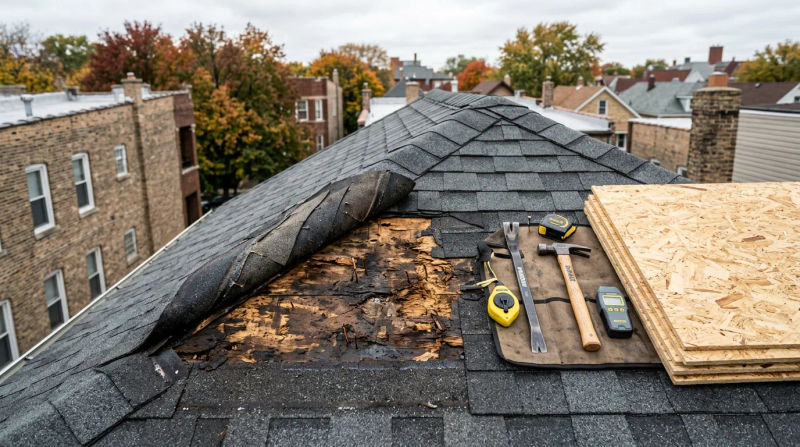
As a roofing specialist with over 15 years of hands-on experience here in Chicago, I’ve learned that the most critical parts of a roof are often the ones you can’t see. Homeowners understandably focus on the shingles, but the wooden structure underneath - the roof deck or sheathing - is the true foundation. When that foundation is compromised by rot, the integrity of your entire roofing system is at risk.
Cost is always a top concern, and a call about replacing rotted decking often comes with a sense of surprise and urgency. Many homeowners don't realize there's a problem until they notice a soft or spongy spot when walking on the roof, or until a contractor discovers it during a tear-off for a new roof installation. My goal here is to provide a transparent breakdown of the roof decking replacement cost so you can understand the variables and budget with confidence.
Especially as we head into fall, it’s the perfect time for an inspection. Addressing a small area of decay now can prevent catastrophic failure under the weight of heavy Chicago snow and ice this winter.
Average Costs in Chicago
First, it's important to understand that roof decking replacement is rarely a standalone project. It's almost always discovered and performed during a larger roof repair or a full roof replacement. When our technicians tear off the old shingles, we fully inspect the condition of the wood sheathing underneath. If we find rot, we document it with photos to show you exactly what we're seeing.
The cost to replace roof sheathing Chicago is typically priced on a per-sheet basis. A standard sheet of sheathing is 4 feet by 8 feet.
- The average cost to replace one 4x8 sheet of rotted roof decking in the Chicago area ranges from $85 to $160.
This per-sheet price generally includes:
- The new sheet of material (either OSB or Plywood).
- The labor to carefully cut out and remove the old, rotted section.
- Installation of the new sheet with code-compliant fasteners.
- Disposal of the old material.
For a minor repair, if we only find two or three compromised sheets, you might expect to add $250 to $480 to your total project cost. However, if the rot is widespread due to a long-term leak or poor attic ventilation, the costs can add up. Replacing the decking on an entire 1,500-square-foot roof could require 45-50 sheets, potentially adding $4,000 to $8,000 or more to the project.
Factors That Affect Price
The per-sheet price is a good starting point, but several factors influence the final rotted roof deck repair price. Our crews are trained to assess these variables to provide an accurate and fair estimate.
1. Extent of the Damage This is the single biggest cost driver. A small, contained area of rot from a single missing shingle is a quick fix. Widespread rot caused by years of attic condensation or failing flashing requires a much more significant repair and a higher investment.
2. Material Type: OSB vs. Plywood The OSB plywood roof deck cost is a key variable.
- OSB (Oriented Strand Board): This is the most common and cost-effective option used today. It’s a strong, reliable material when installed correctly in a properly ventilated system.
- Plywood: Traditionally seen as a more premium product, plywood is often slightly more expensive per sheet. It tends to handle moisture a bit better, swelling more evenly and retaining more structural integrity when wet compared to OSB. We often recommend it for lower-pitched roofs or in areas prone to moisture.
3. Building Era and Existing Decking In many Chicago neighborhoods with older homes, like the pre-1940s bungalows and American Foursquare houses found in areas like Hammond, we don't always find modern sheathing. These homes often have "plank decking" - solid wood boards laid across the rafters. If these planks are rotted, replacement can be more complex. We may need to replace them with new planks or install a full layer of modern sheathing over them to create a smooth, nail-able surface, which adds labor and material costs.
4. Roof Pitch and Accessibility A low-slope, easily walkable roof is much faster and safer to work on than a steep, multi-story roof. Higher pitches require more extensive safety equipment and slower, more deliberate work, which increases labor costs.
5. Underlying Structural Issues In severe cases, the rot isn't just in the decking; it has spread to the underlying support structure, like the rafters or trusses. Repairing these structural components is a much more involved and costly process that moves beyond standard roofing work. This is why addressing decking issues early is so important.
6. Poor Attic Ventilation One of the most common causes of widespread deck rot I see in Chicago is poor attic ventilation. In our cold climate, warm, moist air from inside the house rises into the attic. If it can't escape, it condenses on the cold underside of the roof deck, leading to rot from the inside out. A proper repair doesn't just replace the wood; it addresses the root cause by improving soffit, baffle, and ridge ventilation.
How to Get the Best Value
Getting the best value isn’t about finding the cheapest price; it’s about making a smart, long-term investment in your home’s protection. Here’s how:
- Don't Delay: That small water stain on your ceiling or that slightly spongy spot on the roof is a warning sign. The sooner you address it, the less damage the decking will sustain. A proactive fall inspection can save you thousands.
- Ask About Per-Sheet Pricing Upfront: When getting a quote for a new roof, always ask the contractor how they handle unforeseen decking replacement. A reputable company will have a clear, pre-determined price per sheet in their contract. This prevents sticker shock mid-project.
- Invest in Ventilation: If your contractor recommends ventilation improvements, see it as an investment, not an upsell. Proper airflow is the number one way to prevent premature failure of your roof deck and shingles.
- Prioritize Quality Installation: The way sheathing is installed matters. Our crews follow standardized processes to ensure proper spacing and fastening patterns, which is critical for the roof to withstand Lake Michigan winds and heavy snow loads. An improperly fastened deck can void your shingle warranty.
Questions to Ask Your Contractor
Empower yourself to make an informed decision. Before you hire anyone to work on your roof, ask these questions:
- How will you handle any rotted decking you discover during the tear-off?
- What is your specific per-sheet roof decking replacement cost for both OSB and plywood?
- How will you document the damage for my records and insurance purposes? (They should provide clear photos.)
- Will you assess my attic’s ventilation system to determine the cause of the rot?
- What thickness and grade of sheathing do you recommend for my home, and why?
- Are your crews experienced with older homes in Chicago that may have plank decking?
As a senior specialist at Michael's roofer Co, I've seen how a solid, properly installed deck is the difference between a roof that lasts a decade and one that lasts for thirty years or more. While discovering rot can be stressful, replacing it is a non-negotiable step toward securing your home. Understanding the costs and factors involved is the first step toward making a confident, informed decision.
For a personalized estimate and a thorough inspection of your Chicago home, contact Michael's roofer Co for a free consultation.